
4. Bulldaggers & Lady Lovers: The Bisexual & Lesbian Blues Legends
/On this week’s episode, we discussed the black lesbian and gay subculture in the Harlem Renaissance throughout the 1920s and 1930s in New York. From growing up in poverty to traveling minstrel stars and eventually into nationally renowned recording artists, blues legends like Ma Rainey, Bessie Smith, and Gladys Bentley infused their music with sexuality and reality, hinting at the queer atmosphere of Harlem nightlife that included wild parties, flowing booze, and romps on the road. Many of them were known for their explicit or otherwise 'scandalous' lyrics that were full of innuendo and subtle (or not so subtle!) allusions to queer life and love. Plus, now we have a new lady to add to our Anne Bonny/Lizzie Borden ship: Bessie Smith!
Some Looks at our Queermos
Gertrude "Ma" Rainey

She's been described as 'ugly' but we think that's bullshit. She's gorgeous. (source)

The infamous "Prove it on me BLues" ad featuring Ma Rainey flirting while a cop looks on, suspicious. (source)

Ma Rainey and her wildcats jazz band, featuring Thomas Dorsey on Piano. (source)
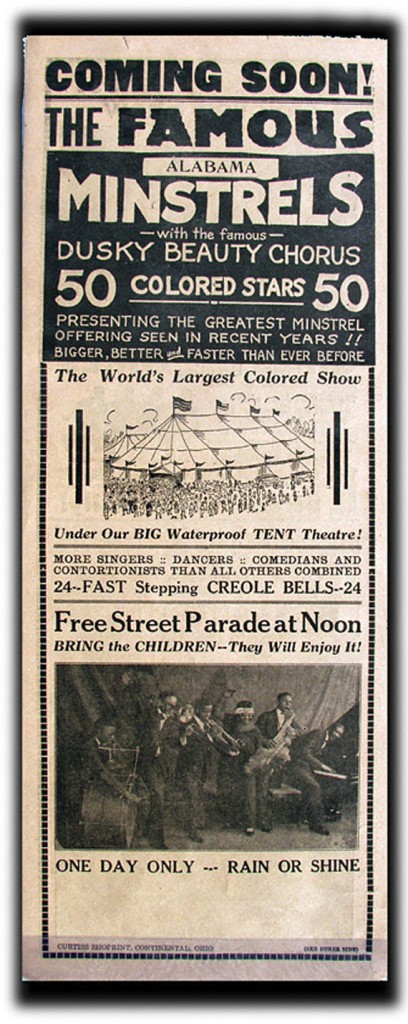
An ad for Ma Rainey and the traveling minstrel show she worked with. (source)

Vinyl of ma Rainey's "dream Blues." (source)
Bessie Smith

Portrait circa 1920.

Empress of the Blues and Fashion icon. (Source)

YOu can tell she's extra just by the feathers.
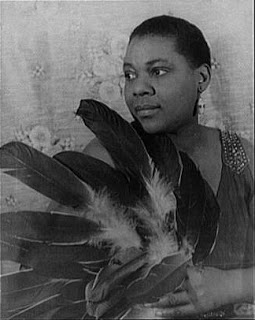
See? Feathers. (Source)

From an advertisement featuring Bessie Smith. (Source)
Gladys Bentley

Bentley and bandleader Willie Bryant, April 17, 1936,
in front of posters for their Apollo show (source)

Advertisement for Glady's show at Mona's in San Francisco, featuring the descriptors "sepia piano artist" and "brown bomber of sophisticated songs" (Source)

Map of clubs in Harlem featuring the Clam House where Glady's performed. (source)

Speaking of Mona's here's an ash tray from the club and it's motto, "Where the girls will be boys." We love it already.

photgraph of the infamous Ebony article from 1952 where Bentley claimed to have turned straight due to hormone treatments. this and the rest of the article can be read here.
Ethel Waters and Ethel Williams

Ethel Waters in "On with the Show," 1929.

Ethel Waters and Fredi Washington in the 1949 play "Mamba's Daughter." IN the play, Washington plays Waters' daughter (though this still looks pretty gay).

Waters circa 1930s.

Portrait of Ethel Waters from 1943.

Waters in Pinky, the 1949 film she was nominated for an academy award for.

The only image we could find of both Ethel Williams (left) and Ethel Waters (Right). (source)
Alberta Hunter

Alberta Hunter, Jazz singer (we'll come back to the Jazz age, we promise!).

Alberta Hunter (right) performs Vaudeville. (Source)
Lucille Bogan/Bessie Jackson

Listen to the Dirty and/or Queer Harlem Renaissance Blues
Ma Rainey's "Prove it On Me Blues"
Ma Rainey's "Sissy Blues"
Bessie Smith's "Empty Bed Blues"
Bessie Smith's "Foolish Man Blues"
Gladys Bentley's "Worried Blues"
Lucille Bogan's "BD Woman's Blues"
Lucille Bogan's "Shave 'Em Dry"
Lucille Bogan's "Groceries on the Shelf"
Check out these mini documentaries about Ma Rainey and Bessie Smith, courtesy of Biography.com for black history month.
And also check out the trailer for HBO's Bessie, available to stream via an HBO subscription.
If you want to learn more about these folks, as well as the history of queerness in the Harlem Renaissance, check out our full list of sources and further reading below!
Online Articles:
ADVENTURES IN FEMINISTORY: THE HISTORY OF HARLEM'S 1920S LESBIAN BLUES SINGERS
“A Spectacle in Color: The Lesbian and Gay Subculture of Jazz Age Harlem” by Eric Garber
Bulldykers and Lady Lovers: The Rumors about Lesbian Blues Singers Were All True by Meagan Day
Books:
Mother of the Blues by Sandra Lieb
Blues Legacies and Black Feminism by Angela Y. Davis
Bessie Smith by Jackie Kay
Bessie by Chris Albertson (excerpt in Gay American History: Lesbians & Gay Men in the USAed by Jonathan Ned Katz)
His Eye on the Sparrow and To Me, It’s Wonderful autobiographies by Ethel Waters
Heat Wave: The Life and Career of Ethel Waters by Donald Bogle
Ethel Waters: Stormy Weather by Stephen Bourne
Queer in History by Keith Stern
The Harlem Renaissance, by Steven Watson (free excerpt p124-144)
Sapphistries by Leila Rupp
Homosexuality in History by Colin Spencer
Bulldaggers, Pansies, and Chocolate Babies by James F. Wilson
Films: